
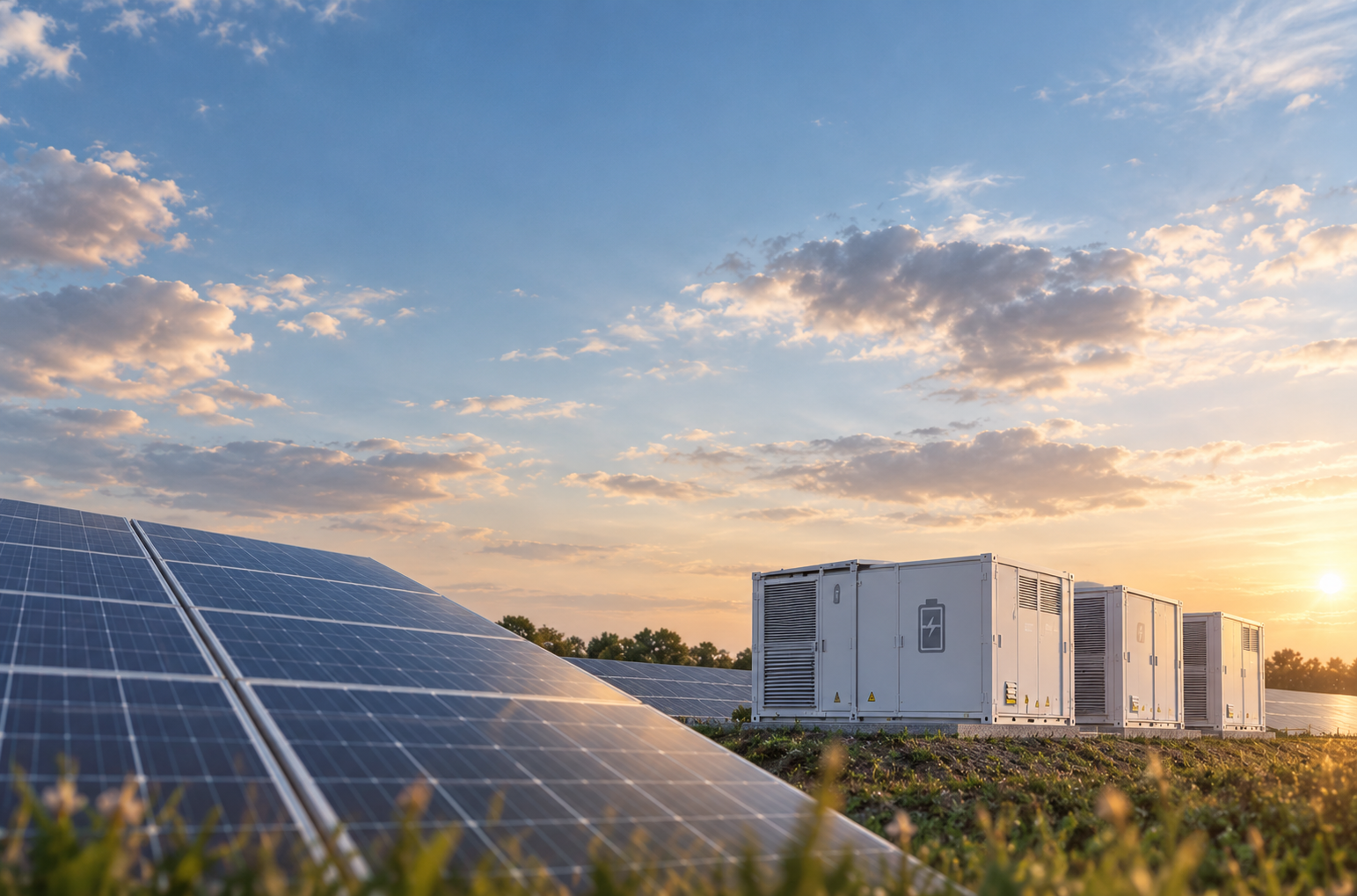
It is the cornerstone of renewable energy.
The data confirms it: the world’s largest BESS projects are now measured in gigawatt-hours. Ranging from 1.4 GWh to 42 GWh, they are located in Australia, the United Arab Emirates, India, Chile, the Philippines, and the United States.
What interests us most isn’t the size. It’s what’s behind it. We find solar plants with integrated batteries, stand-alone grid-backup assets, hybrid projects with continuous supply contracts, and platforms designed for demand-side electrification.
Different models, the same challenge: without smart management, that battery is just idle capacity.
Without an EMS, the battery charges and discharges according to fixed rules, without adapting to market prices or actual demand. With EMS, it decides at every moment whether to charge using surplus solar power, discharge during peak prices, or reserve capacity for a grid service. That decision, repeated thousands of times a day, is the difference between a battery that saves money and one that also generates revenue.
Without PPC, each plant with several MW connected to the grid operates on its own, risking deviations, penalties, or even disconnection if it fails to comply with grid codes.
With PPC, the entire installation (solar, wind, and battery) acts as a single generation unit, automatically complying with the system operator’s requirements.
Contact us for more information about our EMS & PPC solutions.