Enfasys + SRAD = greater flexibility, greater profitability.
In the wake of last week’s event, the Active Demand Response Service (SRAD) is generating a great deal of interest among large consumers who stand to benefit from this mechanism. With the addition of on-site storage and proper energy management, production is not affected by potential activations, which provides a very favorable compensation framework—offering economic returns in exchange for flexibility on the demand side.
At Enfasys, we have already integrated this operating mode directly into our EMS since 2024, ensuring:
– Optimal battery charging, ensuring the necessary energy during activation periods.
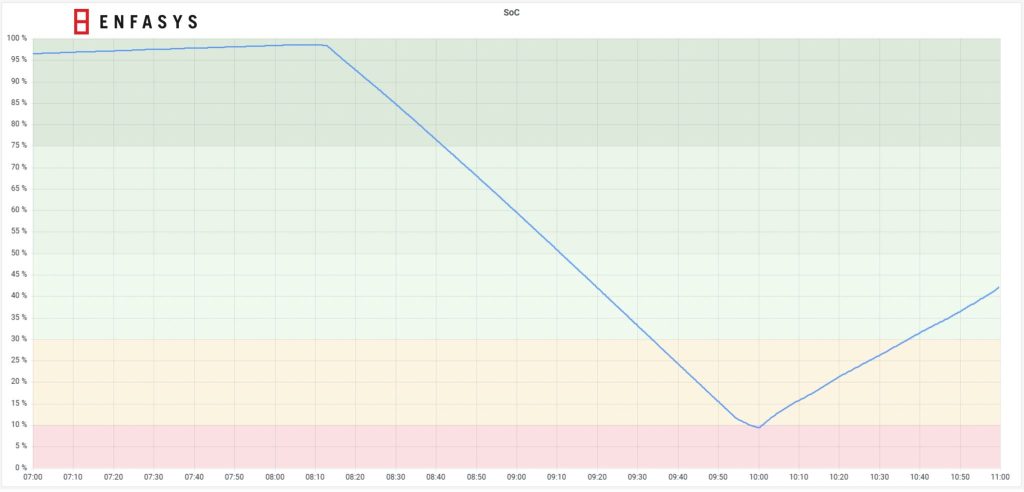
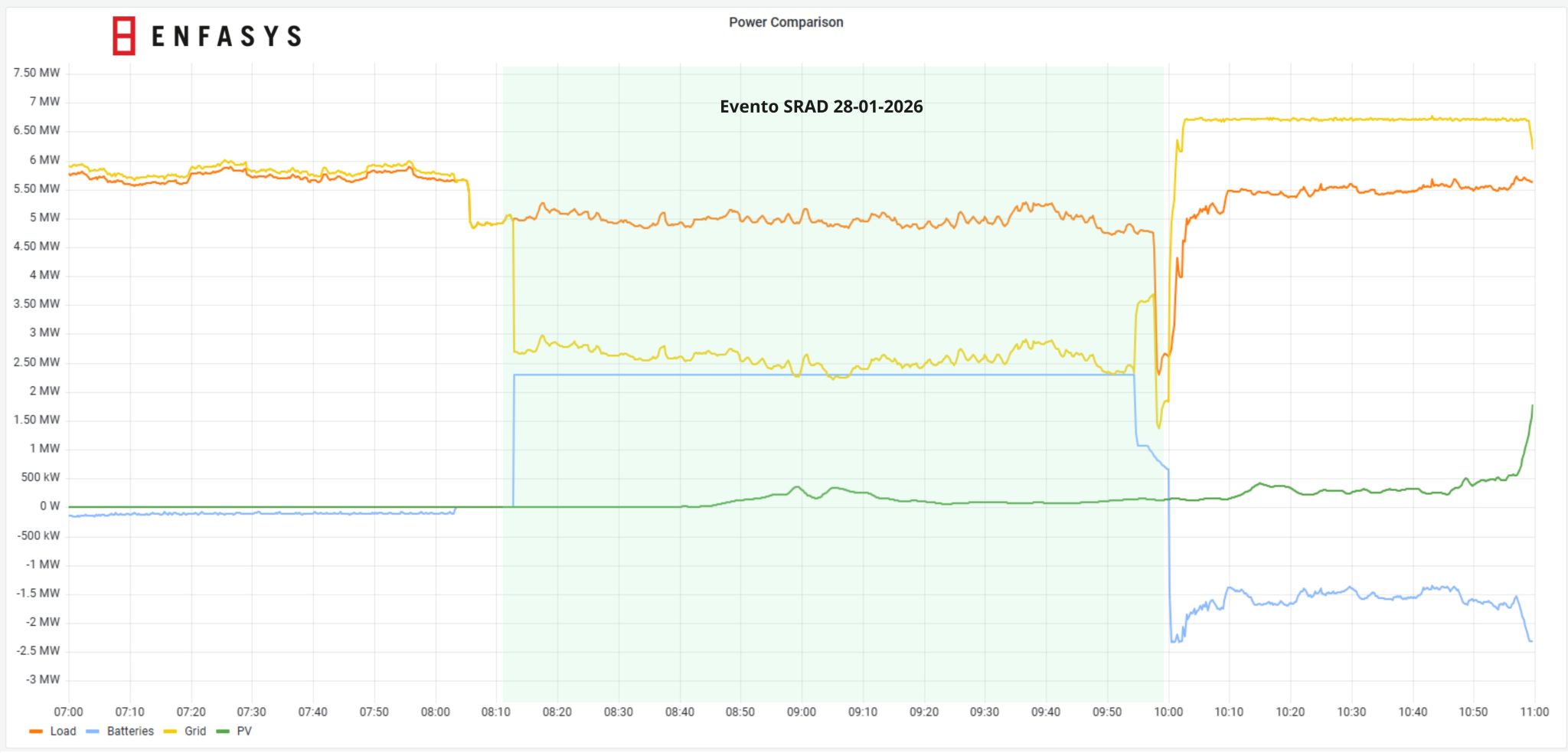
– Power reduction in the event of activation, through the use of the battery.
– Automatic, reliable management aimed at maximizing profitability.
If you’d like to explore how to take advantage of SRAD at your facility, we’d be happy to help.
What is SRAD and why is it so important?
SRAD is an electricity system balancing service, part of tertiary regulation (mFRR), that allows large consumers—as well as smaller facilities through aggregators—to be compensated for reducing their consumption during critical moments in the system. A mechanism that combines operational efficiency, sustainability, and new revenue streams.
Participation:
– Semiannual auctions held by REE to allocate available capacity.
– Facilities >1 MW and, through aggregators, those between 0.1 MW and 1 MW, provided they meet the technical requirements for remote metering and reduction capacity.
– Regulatory framework defined by the CNMC in P.O. 7.5 and P.O. 14.4.
Compensation:
Opportunity with financial incentives. The SRAD compensates participants through two key components:
– Availability payment: Fixed income in €/MW for being prepared to activate load reduction (marginal auction price).
– Activation payment: Additional compensation for unused energy when the system requests curtailment.
Data for the first half of 2026
– Assigned capacity: 1,725 MW
– Hours to be provided: 2,279 h
– Max. 1 activation/day (scheduled times for weekdays and weekends)
– Availability payment: 65 €/MW·h
– Activation payment (example: January 28, 2026): 1,488 €/MWh as the maximum price